
The Library is an independent department of the Konstantinos G. Karamanlis Foundation and was established at the same time as the Foundation, in 1983, under the personal supervision of Konstantinos Karamanlis. The Library collection was assembled to meet the need for more complete documentation of the events referred to in the primary archival material, but also to provide researchers with independent information using only printed sources.
The Library contains over 40,000 books and periodicals, which were purchased or donated by friends of the Foundation and constitute the Main Collection, as well as four important personal collections belonging to Konstantinos Karamanlis, Georgios Daskalakis, Chariton Korizis and Dionysios Flambouras.
COLLECTIONS
Main Collection
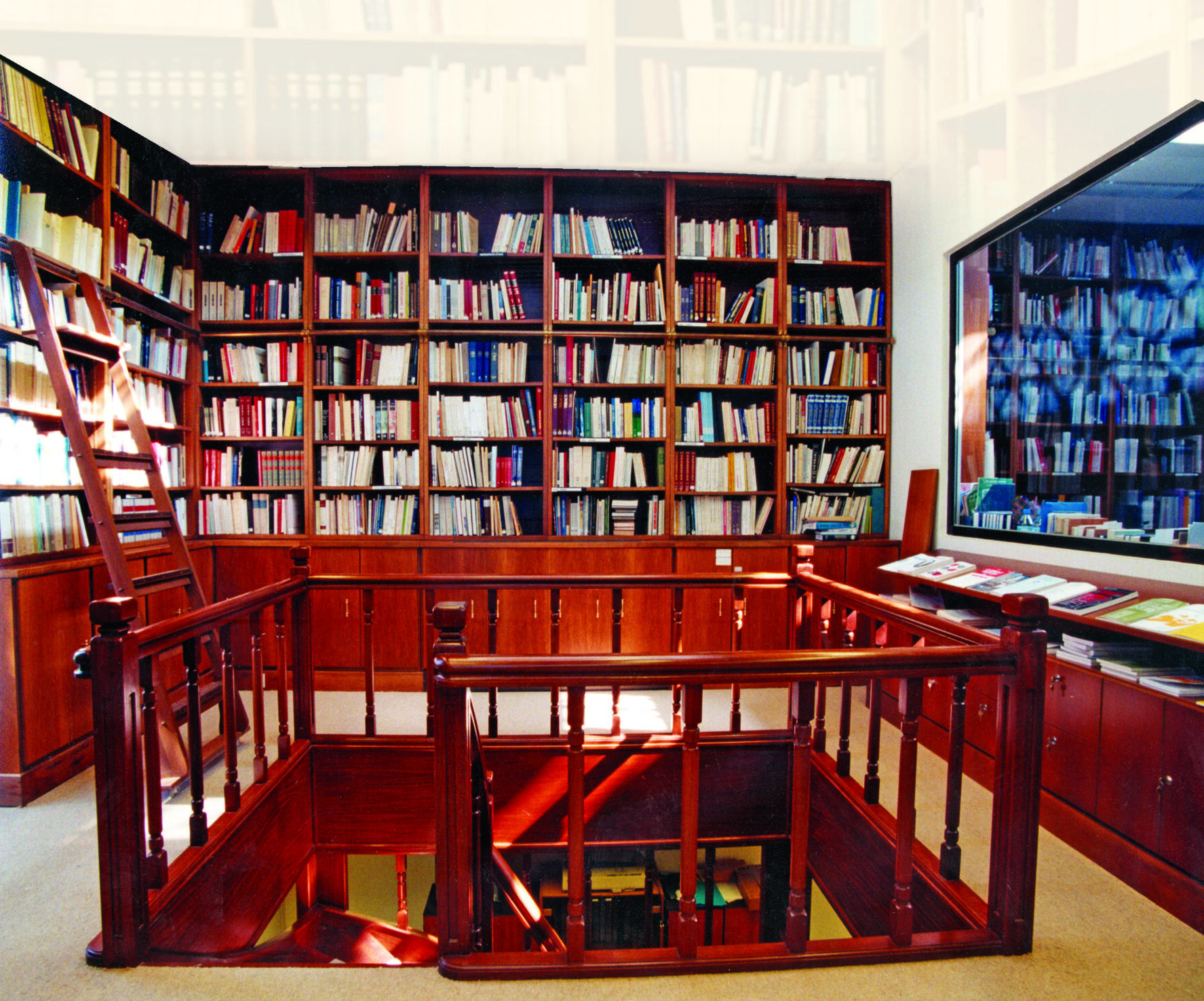
The Main Collection was established in 1983. This collection continues to be enriched to this day and includes books focusing mainly on contemporary Greek history, from World War II to the present day. At the suggestion of Karamanlis himself and the Foundation’s directors, particular emphasis has been given to enriching the collection with topics related to the European Union, from the conception of the European idea to contemporary developments and efforts towards greater political convergence. There are also special sections on historical issues of major importance, such as the Greek Civil War, the Cyprus issue and the history of Macedonia.
K. Karamanlis Collection
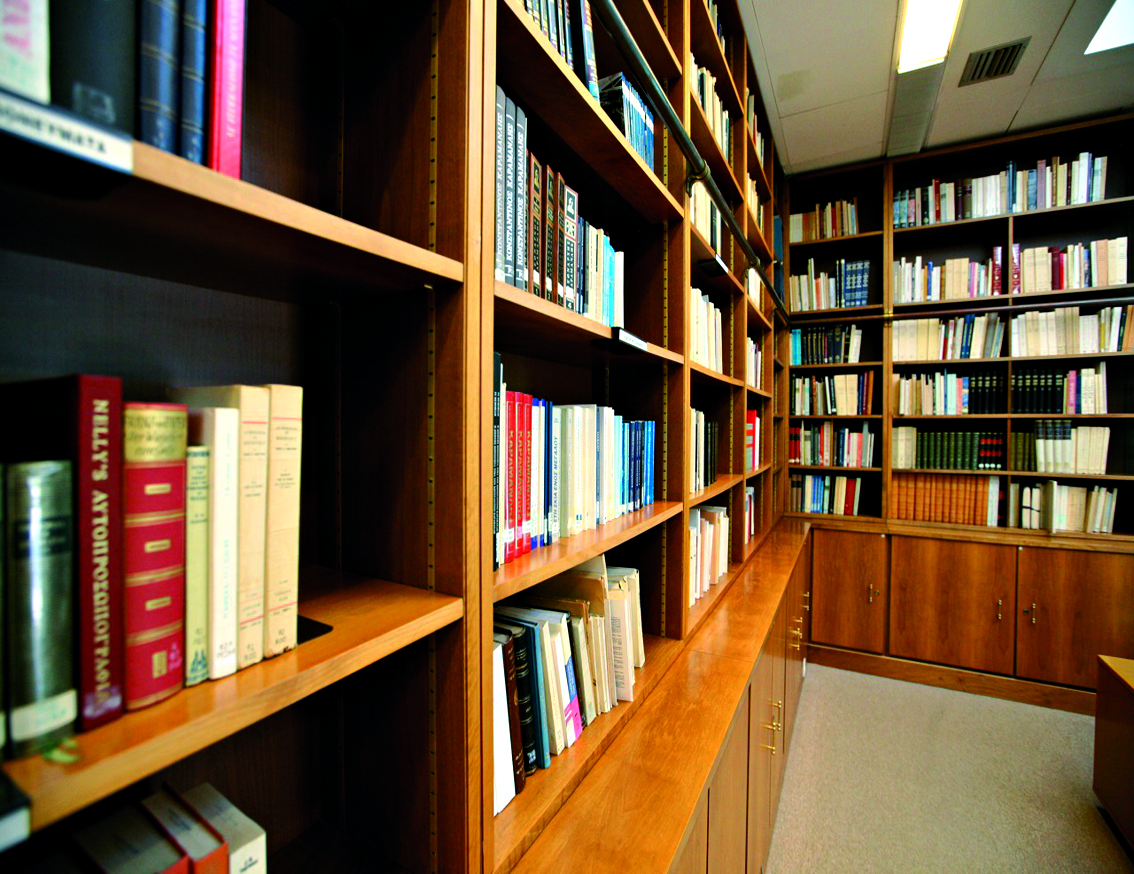
Part of Karamanlis’s personal library was donated to the Foundation by Konstantinos Karamanlis himself. It is a collection comprising works on a variety of subjects, including ancient, modern and contemporary Greek history, as well as works on culture and advanced intellectual thought.
Konstantinos Karamanlis’s keen interest in ancient literature led the Foundation’s directors to decide to enrich the library with classical works by ancient Greek and Latin authors, in French and modern Greek translations.
Other Collections
G. Daskalakis Collection
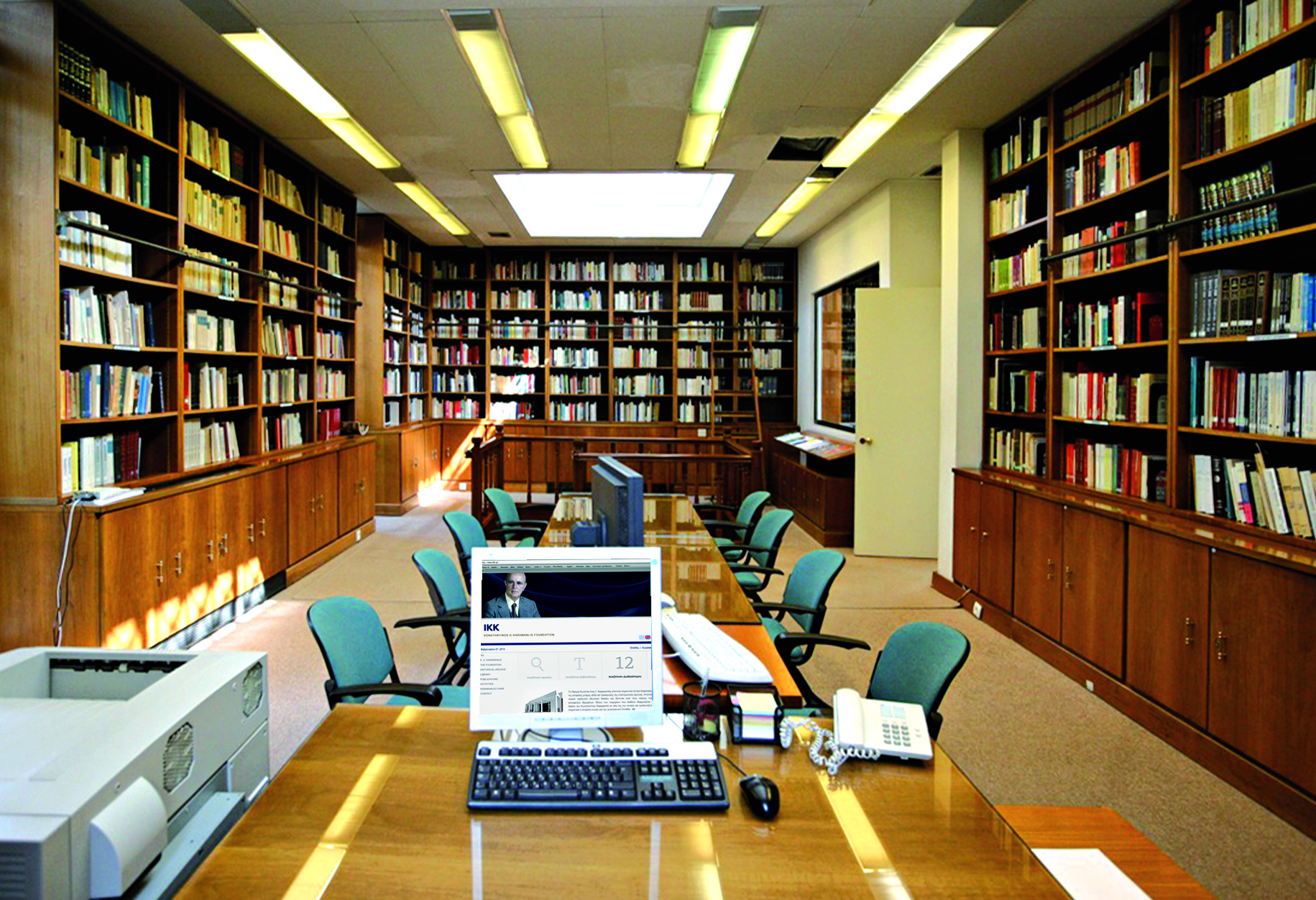
The collection of books and periodicals belonging to Georgios Daskalakis was donated to the Foundation in 1989 by the donor himself. His personal library, now owned by the Foundation, numbers around 10,000 volumes and focuses mainly on issues of both legal science and social sciences, with an emphasis on political and social theory. It is worth noting that the collection mainly includes works published during the Cold War period, while also containing a large number of German and other foreign-language books and periodicals.
H. Korizis Collection
Chariton Korizis, nephew of Prime Minister Alexandros Korizis, was Professor of Political Science at the University of Athens and a close associate of Themistoklis Tsatsos. He was intensely involved in researching the political history of Greece, which is also the main theme of his collection, donated to the Foundation by his wife Vassiliki in 1991. It comprises approximately 1,800 titles, with additional thematic sections on Cypriot history and the economic and social history of the modern Greek state.
D. Flambouras Collection
Dionysios Flambouras, a man with a keen interest in the political events of his time and an active participant in the civil strife, donated his collection of 1,500 books to the Foundation’s Library in 1984. The collection focuses on the history of World War II and the Greek Civil War, as well as the history of the Soviet Union.
P. Tzermias Collection
Pavlos Tzermias was an internationally renowned historian, Hellenist and political analyst. He taught at the University of Fribourg in Switzerland (1965-1995), the University of Zurich (1984-1992) and the Zurich University of Applied Sciences (1961-1977). He was Director of the European Cultural Delphi Centre (1977-1979), correspondent for the Neue Zurcher Zeitung (NZZ) on Greek and Cypriot affairs and Director of the programme for Greeks and Philhellenes on Swiss Radio (1970-1990). During the military dictatorship (1967-1974), his articles in the NZZ were regularly broadcast by Deutsche Welle. His collection consists of over 2,000 books and periodicals mainly on modern Greek history, with a special focus on Cyprus, which Tzermias studied extensively during his academic and journalistic career.
Periodicals
Printed periodicals are an integral part of the Library collection. The material is mainly in Greek and English, while the bibliography is enriched with titles from German- and French-language periodicals. In total, there are 132 Greek-language periodicals and 141 foreign-language periodicals. As with the main collection, the Library aims to cover the subject areas of contemporary history and political and social sciences. It is worth noting that the collection includes complete series, from their very first issue of each periodical, of important historical value undimmed over time, as well as issues dedicated to the political activity of Konstantinos Karamanlis. The collection is classified alphabetically, in chronological order. The following titles are indicative: Current History, Foreign Affairs, International Affairs (foreign-language periodicals)– Nea Estia, Efthyne, Politika Themata and Epoches (Greek-language periodicals).
Collection Management
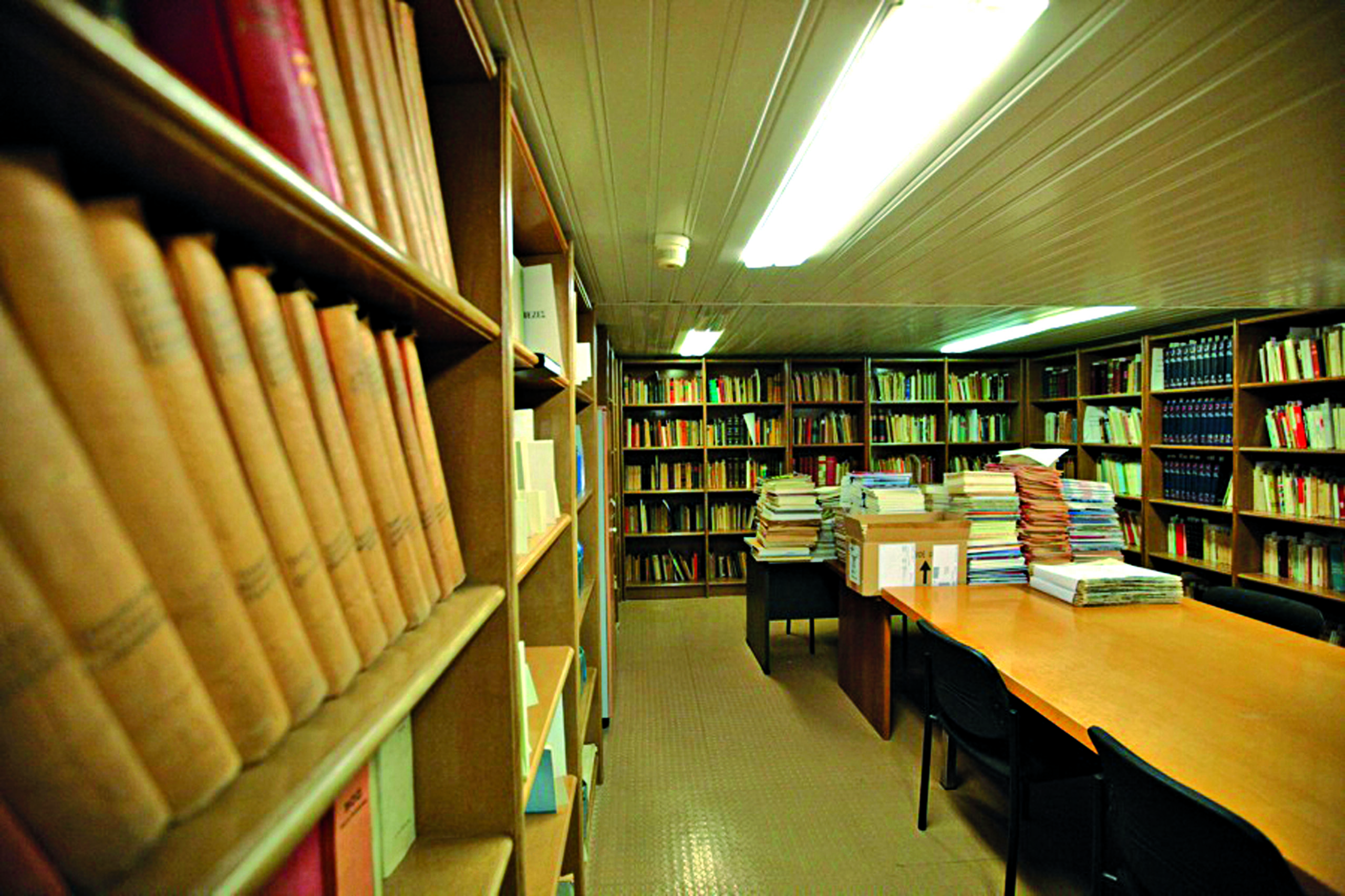
Since its inception, the main concern has been the proper management of the collection’s holdings and the best possible service to users. To this end, since 1992, the library has been equipped with software specially designed for its needs. Since then, the material has been catalogued, classified, and indexed in accordance with international standards.
However, there was an urgent need to modernise the Library’s operations and improve the services provided to users. In line with the modern conception of libraries, the need for effective search and retrieval of the wealth of information contained in the collection became the central focus of the Library’s new strategy. Today, the Library uses the modern KOHA management system, which, among other things, allows users to access all material remotely.
In this way, the Library of the Konstantinos G. Karamanlis Foundation offers its wealth of information to the general public, complementing with its modern services the Foundation’s mission as a centre for the preservation of historical memory and the promotion of academic research.